
How to Add Privacy to a Block Wall With a Vinyl Wall Topper
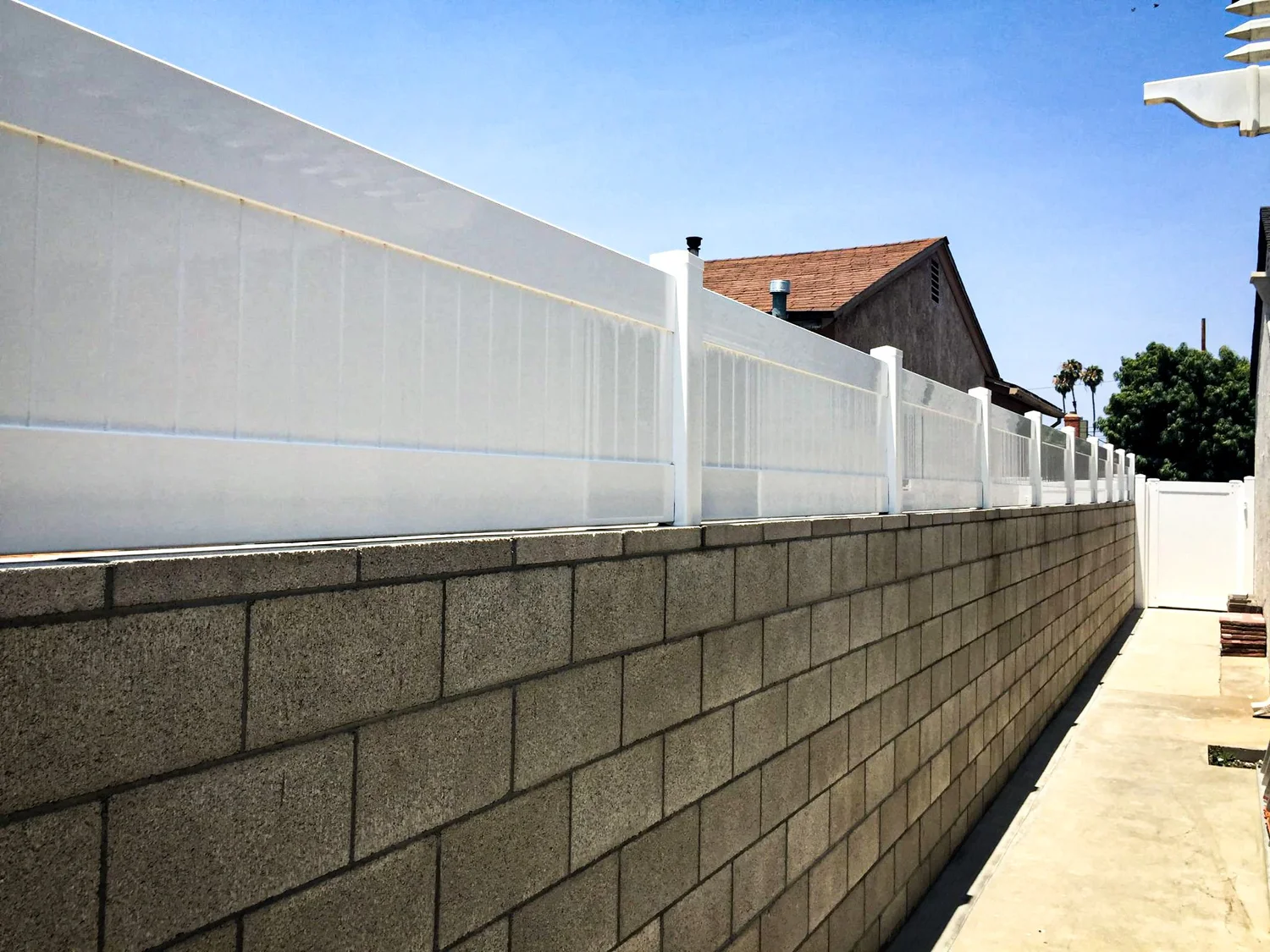
Walk through almost any Orange County neighborhood and you'll see them: block walls running between backyards and along side yards, many of them built decades ago and shorter than homeowners would like today. When the house next door adds a second story, or a new neighbor moves in with a clear view of your patio, that old wall suddenly isn't doing much for your privacy.
Tearing out a solid masonry wall and starting over is a big, disruptive project. For a lot of homes there's a simpler answer: a vinyl wall topper.
What Is a Vinyl Wall Topper?
A wall topper is a run of vinyl fencing mounted on top of the wall you already have — block, brick, or stucco. Posts are anchored into the wall, and vinyl panels run between them, so the finished result reads as one taller, more private wall. Solid privacy panels are the most popular choice, but more open styles are an option if you'd rather keep some light and breeze coming through.
Why Homeowners Choose Vinyl
Privacy where you actually need it. A topper adds height right where your view is exposed — along a side yard, behind a patio, or facing a two-story neighbor.
Built for Southern California sun. Vinyl doesn't rot, split, or attract termites, and it never needs to be painted or stained. Most of the time, an occasional rinse is all it takes to keep it looking new (here's how to clean vinyl fencing).
You keep the wall you already paid for. No demolition and no new footings along the whole property line — the existing wall does the heavy lifting.
A cleaner, finished look. A crisp white or sand-toned topper can make an older, weathered wall look updated, and it's much harder to climb over than a bare wall.
What to Check Before You Install One
Is the wall in good shape? A topper adds height, and height means more wind load — something that matters here when the Santa Ana winds kick up. A wall that's cracked, leaning, or wasn't built to carry extra height may need repairs first. This is the first thing we look at before we recommend a topper.
How tall can it be? Cities count the wall and the topper together as one total height. In Orange County, side and rear yard limits commonly land somewhere between 6 and 8 feet, and front yards are much lower. Look up the rules for your city in our service area guides — each city page has a Fence Rules & Permits section.
Do you need a permit or HOA approval? Permit rules vary a lot from city to city, and many HOAs have their own height and material requirements on top of the city's. Our guide to HOA rules and permits in Orange County covers what to ask before you start.
Who owns the wall? If the wall sits on the property line, it likely belongs to you and your neighbor together, and you'll want their agreement before adding anything to it. Here's how to handle property lines and neighbors the right way.
Before and After
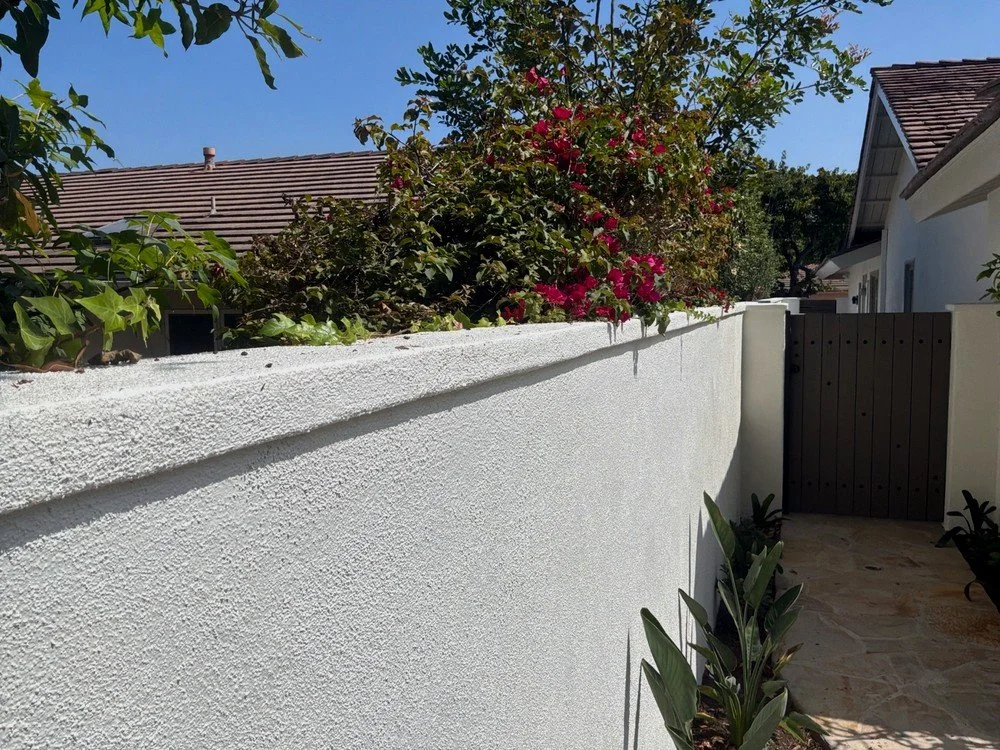
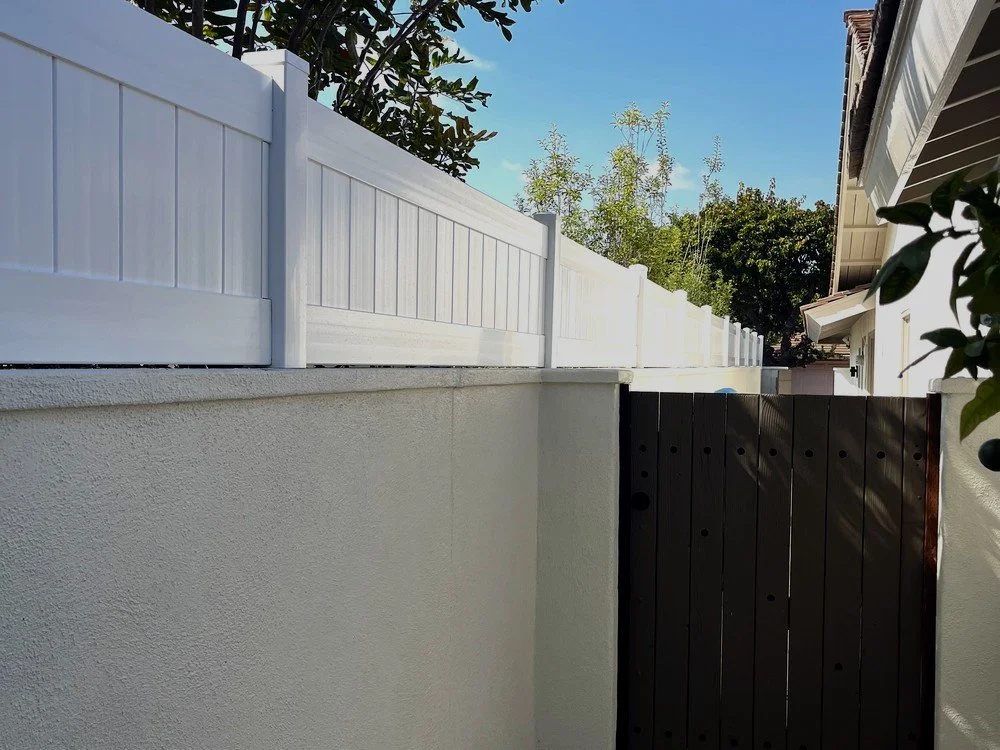
This side yard had a solid stucco wall that was structurally sound but left the backyard open to the neighbors. A white full-privacy vinyl topper added the height the homeowners wanted, and it reads as part of the wall rather than something bolted on.
Thinking about adding height to your wall? During your free estimate, we'll check the condition of the wall, confirm your city's height limits, and help you pick the style that fits your home. Contact Legacy Fence or call (714) 862-0178 to get started.